
Insights
Analysis of Ethiopia's economy
Macro intelligence briefs, policy commentary and research from the GCA team.
Ethiopia’s Rebased Economy: What the New GDP Series Means for Investment, Tax and Debt
Ethiopia’s national accounts have been rebased to EFY 2017 (2024/25), raising nominal GDP by 59% to ETB 24.03 trillion (USD 201 billion). In this Macro Intelligence Brief, Growth Capital Analytics explains what the revision changes. Industry’s share rises to 30.2% of GDP, investment is revised up to 35.3% of GDP, and fiscal and debt ratios fall by about 37%. The brief sets out what this means for revenue mobilization, debt sustainability and Ethiopia’s IMF program ahead of the 6th review, and...
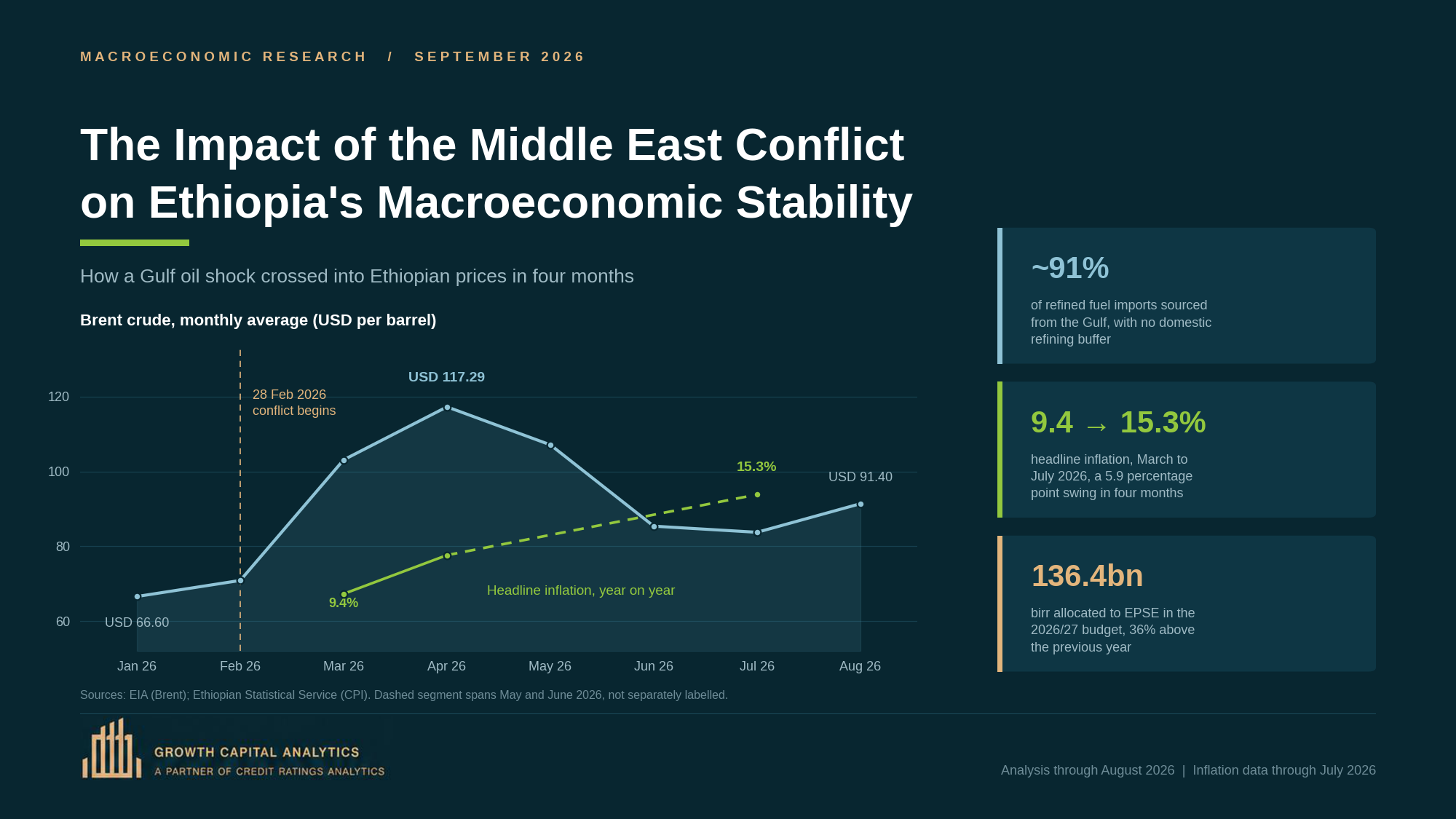
The Middle East Conflict and Ethiopia's Macroeconomic Stability: What the 2026 Shock Revealed
On 28 February 2026, a joint US and Israeli campaign against Iran triggered the restriction of shipping through the Strait of Hormuz, the chokepoint for roughly 20% of global oil flows. Within five months, the consequences were visible in Ethiopian pump prices, the federal budget, and the CPI. Our new report traces that transmission from the Gulf to Addis Ababa, and sets out what it implies for policy. The global shock Brent crude rose 45% between February and March 2026, averaging USD 103.13...

Navigating the Path to Liberalization: Export Performance Key to Prosperity
Ethiopia’s economic liberalization efforts under the Homegrown Economic Reform Agenda (HGER) 2.0 represent a pivotal step in its development trajectory. However, the success of these reforms will largely depend on the country's ability to significantly improve its export performance. No nation has achieved long-term economic prosperity without producing or extracting resources for trade. Ethiopia must prioritize this essential aspect to unlock its full economic potential. Growth Capital...
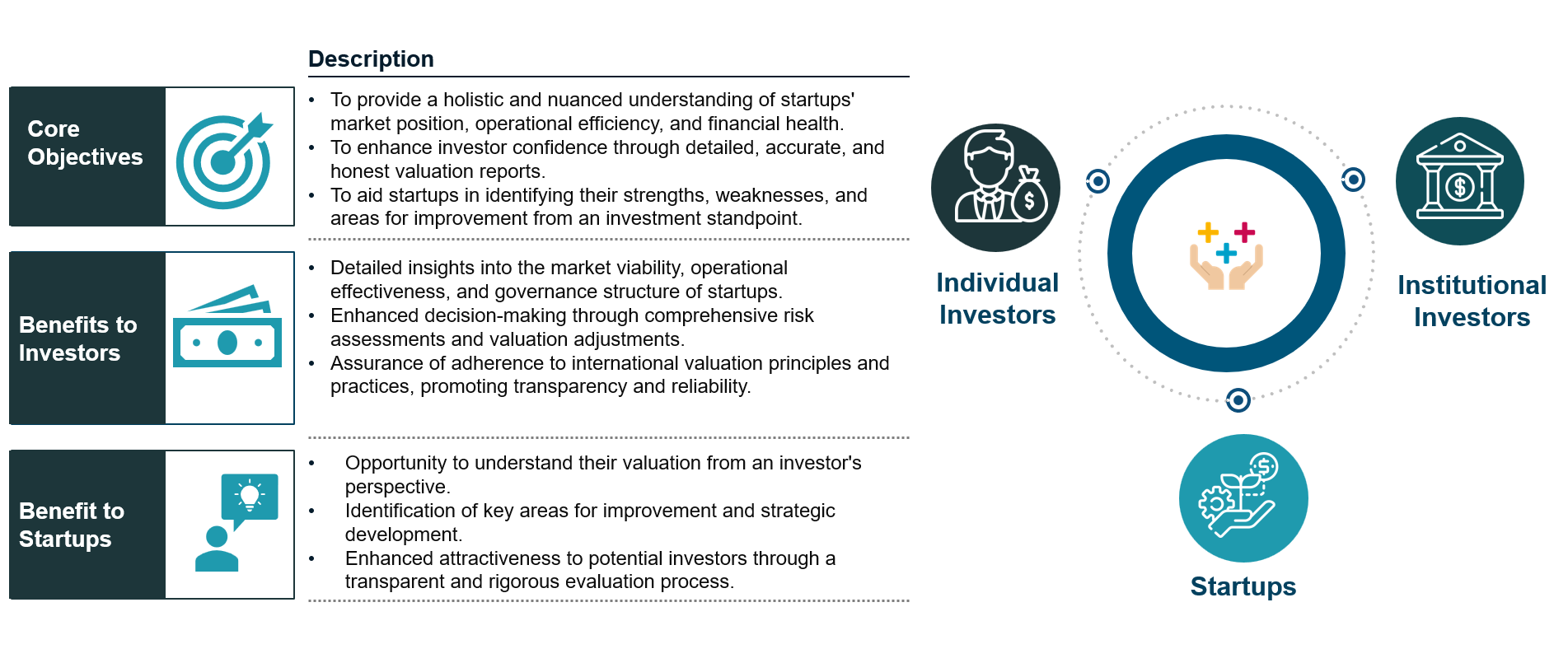
Fueling Startup Success: GCA's Innovative Valuation and Due Diligence Framework
Ethiopia is witnessing a transformative phase in its startup ecosystem, underscored by a burgeoning array of innovative ventures. From taxi-hailing applications to digital payment platforms, these startups are revolutionizing industries and propelling economic expansion. This dynamic growth trajectory is bolstered by a youthful demographic, an expanding middle class, and increasingly accessible technology. Historically, Ethiopia’s startup environment has grappled with restrictive regulatory...
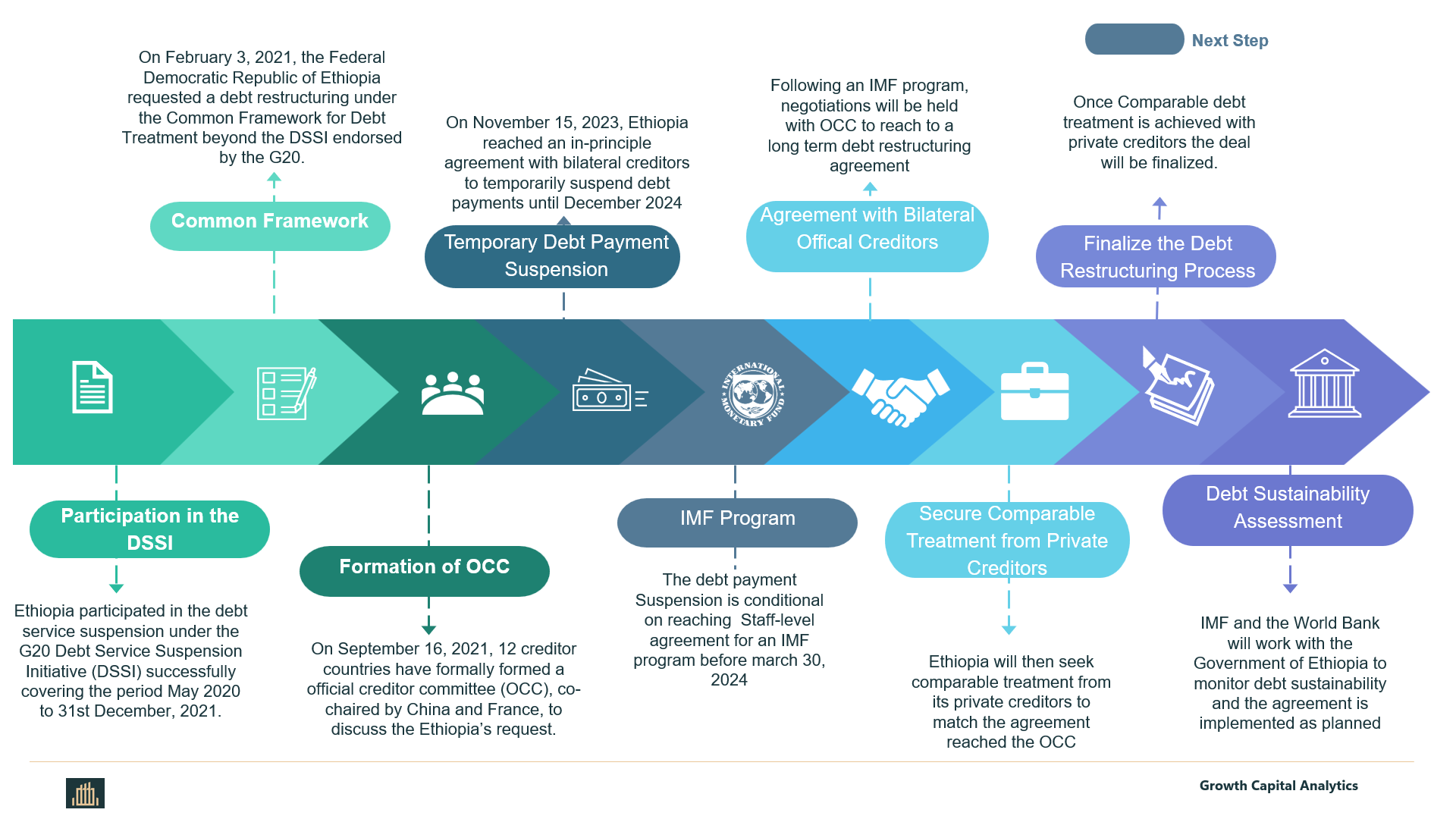
Ethiopia’s Debt Restructuring: A Pathway to Fiscal Sustainability
In an era where African economies are increasingly grappling with the complexities of debt sustainability, Ethiopia's fiscal narrative offers a compelling study of the delicate interplay between development aspirations and financial stability. Ethiopia’s ambitious public investment-driven growth, once a beacon of hope, has encountered daunting headwinds of surging debt levels. This development journey serves as a cautionary tale about the perils of external borrowing and underscores the...

Draft Public Offering and Trading Securities Directive: A Critical Analysis
The draft Ethiopia's Public Offering and Trading of Securities Directive, recently introduced by the Ethiopian Capital Market Authority (ECMA), marks a significant milestone in the nation's financial landscape. This new directive, shared for public comment and consultation, is designed to establish a structured framework for public offerings of shares, aiming to stimulate financial market development and bolster investor protection. While the new law represents a crucial step in Ethiopia's...

Ethiopia's BRICS Membership: A Strategic Lever for Economic and Geopolitical Advancement
Recently, the Friedrich Ebert Stiftung (FES) and the Institute for Peace and Security Studies (IPSS) hosted a Breakfast Meeting to explore the implications of Ethiopia's potential BRICS membership. The event was themed "Ethiopia’s BRICS-Membership: Prospects for Economy and Geopolitics" and featured a critical review by Dawit Ayele Haylemariam, Managing Partner at Growth Capital Analytics. This blog post delves into the key takeaways and strategic recommendations from the event.Why BRICS...
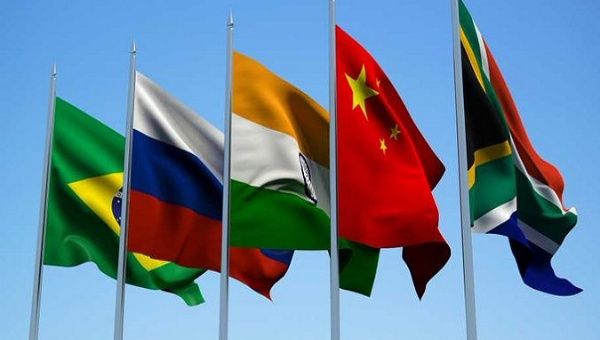
Ethiopia's Bold Move: Is BRICS Membership a Potential Turning Point?
In an unexpected strategic gambit, Ethiopia has declared its aim to join the BRICS coalition - an influential alliance comprising Brazil, Russia, India, China, and South Africa. Announced with confidence by the Ministry of Foreign Affairs, this aspiration appears audacious in the face of Ethiopia's current challenges including heightened diplomatic pressure from the West, internal instability, and climate shocks. Nevertheless, this initiative aligns with the nation's ambition to bolster its...
A Paradigm Shift: Ethiopia's Journey from Development to Entrepreneurial State
How a new state ideology might shape Ethiopia’s economic future In a recent executive committee meeting of Ethiopia's Prosperity Party (PP), Prime Minister Abiy Ahmed (PhD) unrolled an audacious vision for an “entrepreneurial state”. The Prime Minister proposed an audacious new vision to recalibrate Ethiopia's economic course – a shift towards an "entrepreneurial state". Over a two-hour presentation touching Ethiopia's economic, political, and social dimensions, the PM painted a...
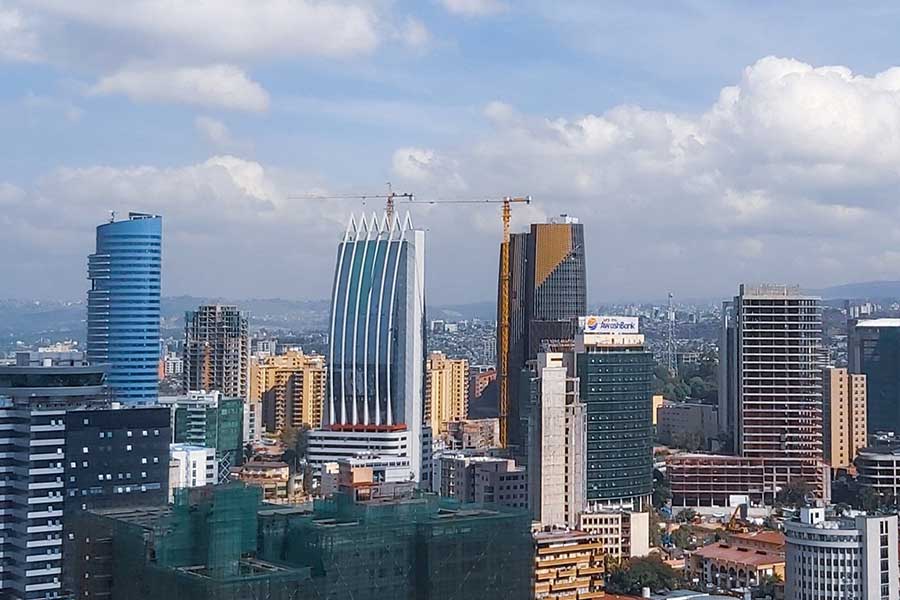
The Ethiopian Economy's Twin Distortions: A Barrier to Growth and a Threat to Stability
The Ethiopian government must urgently address the overvalued currency and negative real interest rates as the central pillars of its homegrown economic reform agenda. Imagine navigating a complex problem much like Alexander the Great in ancient Gordium, Phrygia, facing the legendary Gordian Knot. This intricate puzzle, tied around an oxcart, held a promise that whoever untied it would conquer all of Asia. In 333 BC, Alexander was confronted with this challenge. Instead of attempting to...

From Financial Exclusion to Economic Inclusion: The Urgent Need for a Credit Rating System for MSMEs
Ethiopia, like many developing countries, has a vibrant and growing micro, small, and medium-sized enterprise (MSME) sector. MSMEs are an essential driver of economic growth, employment, and poverty reduction in Ethiopia. However, many MSMEs struggle to access finance due to the lack of credit information and the absence of a credit rating system. A credit rating system is a tool that assesses the creditworthiness of businesses based on their financial history, creditworthiness, and other...